- Translators
- Translation Services
- Testimonials
- FAQ
- Contact Us
Arabic Translator for Bonny Hills
NAATI certified Arabic translation services for Bonny Hills, delivered usually within 24-48 hours.
NAATI Certified
24-48 Hour Delivery
Secure Payment
Get a free quote for professional Arabic translation in Bonny Hills. Complete the form for an instant quote or a response within 15 minutes.
NAATI Translators for all Locations
 Get NAATI translation services wherever you're based in Australia. All NAATI translators have up-to-date credentials with NAATI for providing certified document translations in Australia.
- Arabic translator Sydney
- Arabic translator Melbourne
- Brisbane translation services
- Perth translation services
- Adelaide translation services
- Canberra translation services
- Cairns translation services
- Hobart translation services
- Launceston translation services
- Darwin translation services
NAATI Arabic Translator for Bonny Hills
 Get fast and reliable NAATI Arabic translator for your personal documents. A PDF of the certified translation is sufficient for most official purposes in Australia.
Our professional translators can also assist with marketing translation, medical translation and complex technical translations.
- Arabic certificate translation Bonny Hills
- Arabic document translation Bonny Hills
- Arabic driver licence translation Bonny Hills
- Arabic marriage certificate translation
- Arabic birth certificate translation
- Arabic marriage certificate translation
- Arabic divorce certificate translation
- Arabic death certificate translation
- Arabic bank statements translation
- Arabic payslip or salary translation
- Arabic passport translation
- Arabic degree or diploma translation
- Arabic academic transcript translation
- Arabic police report translation
- Arabic utility bill translations
- Arabic wills and probate translations
Bonny Hills Design Services
- Update Existing Brochure - Bonny Hills
This service is particularly useful for organisations looking to refresh their brochure for the new year or promote the content in multiple languages with possible adjustments to images used. - Multilingual Namecard Translations - Bonny Hills
Bonny Hills Valuation Services
- Independent Website Valuation Report - Bonny Hills
An indepedent analysis of the value of a website, to ensure fair market valuation. This service can be particularly beneficial for businesses looking to buy, sell, or assess the value of their online assets. This website valuation report can be provided in various languages. - Independent Property Valuation Report - Bonny Hills
Comprehensive property valuation reports conducted by a professional depreciation firm. These reports help clients understand the market value of their properties for various purposes, including sales, acquisitions, and financial reporting. This report can be provided in various languages.
About Bonny Hills
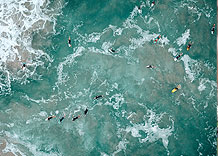
Bonny Hills is a town in New South Wales, Australia on the Tasman Sea coast about 18 km south of Port Macquarie. The Wauchope–Bonny Hills Surf Life Saving Club is the longest established organisation within the town and has been continuously operating since 1958. The Surf Club built a new club house at their headquarters of Rainbow Beach in 2009 replacing the original building which was built by voluntary local efforts in 1959. Bonny Hills has a service station, local Tavern, local beach, two holiday parks, post office and a fire station. The Birpai (also known as Birrbay) people have lived in this area for more than 40,000 years.
Bonny Hills was originally known as Green Hills, or colloquially as "Creamy". Much of the land was owned by A. D. Suters, the only permanent resident, with four other weekender houses owned by his brothers, Eddie and Jack Suter, and Colin Bain. In March 1933, Thomas R. (Tom) Bartlett, coming from Wauchope, visited Green Hills with his son, Arthur, and working partner Ted Hungerford, immediately purchasing 20 acres of land from A.D. Suters, later purchasing another 162 acres. The Bartlett family cleared an area and built a house, moving in around 28 December 1933.
Acreage of passionfruit vines were planted and sold to campers, but this endeavour was wiped out in 1938 by a strong, three-day wind. In 1946, banana and pineapple seeds were also planted in the area, becoming a popular industry until 1955, when Arthur Bartlett dug up the trees and ploughed the land back into grass.
Some years earlier, in 1944, a dam was built to supply water to Green Hills. In December 1946, Bob Adamson, representing E. Adamson and Sons, approached the permanent residents, wishing to buy a piece of land and erect a post office and telephone exchange. Into the following year, the postal department expressed that they could not construct a post office until they changed the town's name, as there were many other "Green Hills". A Progress Association meeting was called and a new name was voted on, initially deciding on "Grants Head" (as it read on most maps), before a woman suggested "Bonny Hills", winning over the majority.
In Bonny Hills (State Suburbs), of people aged 15 years and over, 55.0% of people were in a registered marriage and 10.0% were in a de facto marriage.
In Bonny Hills (State Suburbs), 27.8% of people were attending an educational institution. Of these, 27.7% were in primary school, 32.0% in secondary school and 12.1% in a tertiary or technical institution.
In Bonny Hills (State Suburbs), 72.7% of people had both parents born in Australia and 11.0% of people had both parents born overseas.
In Bonny Hills (State Suburbs), of people aged 15 years and over, 75.8% did unpaid domestic work in the week before the Census. During the two weeks before the Census, 27.6% provided care for children and 14.2% assisted family members or others due to a disability, long term illness or problems related to old age. In the year before the Census, 24.7% of people did voluntary work through an organisation or a group.
In Bonny Hills (State Suburbs), 26.6% of single parents were male and 73.4% were female.
In Bonny Hills (State Suburbs), of couple families with children, 17.8% had both partners employed full-time, 4.0% had both employed part-time and 22.1% had one employed full-time and the other part-time.
In Bonny Hills (State Suburbs), 89.6% of private dwellings were occupied and 10.4% were unoccupied.
In Bonny Hills (State Suburbs), of occupied private dwellings 1.6% had 1 bedroom, 9.5% had 2 bedrooms and 41.4% had 3 bedrooms. The average number of bedrooms per occupied private dwelling was 3.4. The average household size was 2.5 people.
In Bonny Hills (State Suburbs), of all households, 77.8% were family households, 20.0% were single person households and 2.2% were group households.
In Bonny Hills (State Suburbs), 20.5% of households had a weekly household income of less than $650 and 10.0% of households had a weekly income of more than $3000.
In Bonny Hills (State Suburbs), 32.3% of occupied private dwellings had one registered motor vehicle garaged or parked at their address, 45.0% had two registered motor vehicles and 18.7% had three or more registered motor vehicles.
In Bonny Hills (State Suburbs), 86.5% of households had at least one person access the internet from the dwelling. This could have been through a desktop/laptop computer, mobile or smart phone, tablet, music or video player, gaming console, smart TV or any other device.
In Bonny Hills (State Suburbs), 52.1% of Aboriginal and/or Torres Strait Islander people were male and 47.9% were female. The median age was 26 years.
In Bonny Hills (State Suburbs), for dwellings occupied by Aboriginal and/or Torres Strait Islander people, the average household size was 3.1 persons, with 0.9 persons per bedroom. The median household income was $1,666.
In Bonny Hills (State Suburbs), for dwellings occupied by Aboriginal and/or Torres Strait Islander people, the median weekly rent was $360 and the median monthly mortgage repayment was $2,167.
About the Arabic Language
Arabic is a Semitic language that first emerged in the 1st to 4th centuries CE. It is now the lingua franca of the Arab world. It is named after the Arabs, a term initially used to describe peoples living in the area bounded by Mesopotamia in the east and the Anti-Lebanon mountains in the west, in Northwestern Arabia and in the Sinai Peninsula. The ISO assigns language codes to thirty varieties of Arabic, including its standard form, Modern Standard Arabic,[6] also referred to as Literary Arabic, which is modernized Classical Arabic. This distinction exists primarily among Western linguists. Modern Standard Arabic is an official language of 26 states and 1 disputed territory, the third most after English and French.
During the Middle Ages, Arabic was a major vehicle of culture in Europe, especially in science, mathematics and philosophy. As a result, many European languages have also borrowed many words from it. Arabic influence, mainly in vocabulary, is seen in European languages-mainly Spanish and to a lesser extent Portuguese, Catalan, and Sicilian-owing to both the proximity of Christian European and Muslim Arab civilizations and the long-lasting Arabic culture and language presence mainly in Southern Iberia during the Al-Andalus era. The Maltese language is a Semitic language developed from a dialect of Arabic and written in the Latin alphabet. The Balkan languages, including Greek and Bulgarian, have also acquired a significant number of Arabic words through contact with Ottoman Turkish.
Arabic has influenced many other languages around the globe throughout its history. Some of the most influenced languages are Persian, Turkish, Hindustani (Hindi and Urdu), Kashmiri, Kurdish, Bosnian, Kazakh, Bengali, Malay (Indonesian and Malaysian), Maldivian, Pashto, Punjabi, Albanian, Armenian, Azerbaijani, Sicilian, Spanish, Greek, Bulgarian, Tagalog, Sindhi, Odia and Hausa and some languages in parts of Africa. Conversely, Arabic has borrowed words from other languages, including Hebrew, Greek, Aramaic, and Persian in medieval times and languages such as English and French in modern times.